
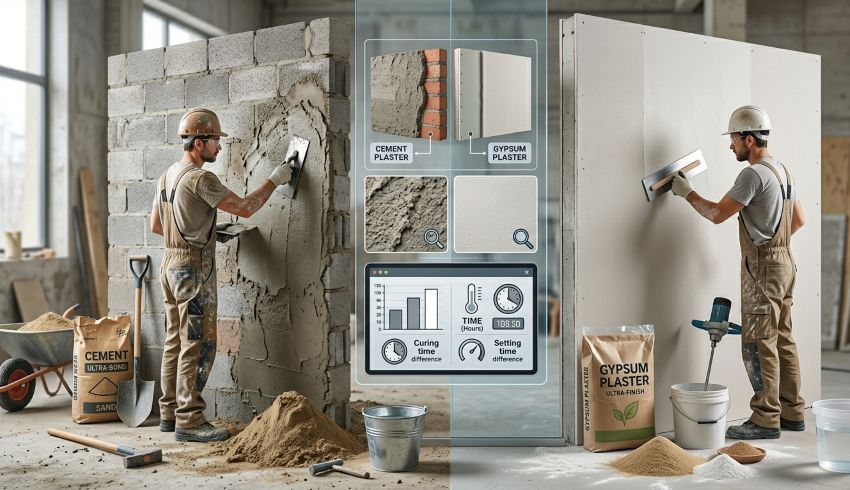
Choosing the right wall finishing material is a crucial step in any construction or renovation project. Among the most popular options available today are cement plaster and gypsum plaster. While both materials are designed to create smooth, durable wall surfaces, they differ significantly in terms of composition, application, durability, cost, maintenance, and overall performance.
Understanding the difference between cement plaster and gypsum plaster can help homeowners, contractors, and property developers select the most suitable solution for their specific project requirements.
In this comprehensive guide, we’ll compare cement plaster vs gypsum plaster, discuss their advantages and disadvantages, and explain which option is best for different types of construction projects.
What Is Cement Plaster?
Cement plaster is a traditional wall-finishing material made by mixing cement, sand, and water. The mixture is applied to walls and ceilings to create a strong and protective surface.
For decades, cement plaster has been the preferred choice for residential, commercial, and industrial construction due to its durability and weather resistance.
Main Features of Cement Plaster
- High strength and durability.
- Suitable for interior and exterior walls.
- Excellent moisture resistance.
- Strong bonding with masonry surfaces.
- Long-lasting performance.
Because of its toughness, cement plaster remains a popular choice for areas exposed to harsh environmental conditions.
What Is Gypsum Plaster?
Gypsum plaster is a ready-made plastering material manufactured from gypsum minerals. Unlike cement plaster, it does not require sand and can be directly mixed with water before application.
Gypsum plaster has become increasingly popular in modern construction because it offers a smoother finish and significantly reduces construction time.
Main Features of Gypsum Plaster
- Smooth and uniform wall finish.
- Faster application process.
- No curing required.
- Lightweight material.
- Ideal for interior walls and ceilings.
Its ease of application and superior finish make gypsum plaster a preferred option for modern interior spaces.
Cement Plaster vs Gypsum Plaster: Quick Comparison
| Feature | Cement Plaster | Gypsum Plaster |
| Material Composition | Cement, Sand, Water | Gypsum-Based Powder |
| Suitable Location | Interior & Exterior | Interior Only |
| Surface Finish | Moderate | Very Smooth |
| Curing Required | Yes | No |
| Application Time | Longer | Faster |
| Water Resistance | Excellent | Limited |
| Weight | Heavy | Lightweight |
| Crack Resistance | Moderate | High |
| Painting Preparation | Often Requires Putty | Usually Ready for Paint |
| Labor Requirement | Higher | Lower |
Key Differences Between Cement Plaster and Gypsum Plaster
1. Surface Finish Quality
One of the biggest advantages of gypsum plaster is its smooth finish.
Gypsum plaster creates a level and polished surface that often requires little to no additional wall putty before painting. In contrast, cement plaster may require extra finishing work to achieve the same appearance.
2. Installation Speed
Gypsum plaster significantly reduces project completion time.
Since it comes as a ready-to-use product and does not require curing, walls can be prepared for painting much sooner.
Benefits of Faster Installation
- Reduced construction timelines.
- Lower labor costs.
- Faster project handover.
- Improved overall efficiency.
For projects with strict deadlines, gypsum plaster is often the preferred choice.
3. Durability and Strength
Cement plaster is known for its superior durability and strength.
It performs exceptionally well in areas exposed to:
- Moisture.
- Outdoor weather conditions.
- Heavy traffic.
- Mechanical impact.
Gypsum plaster provides sufficient durability for indoor applications but is generally less resistant to physical damage compared to cement plaster.
4. Water Resistance
When it comes to moisture resistance, cement plaster is the clear winner.
Cement plaster is suitable for:
- Exterior walls.
- Bathrooms.
- Kitchens.
- Basements.
- Water-prone environments.
Gypsum plaster is primarily intended for dry interior spaces and should not be continuously exposed to moisture.
5. Curing Requirements
Cement plaster requires curing after application to achieve maximum strength.
This process involves keeping the surface moist for several days.
Gypsum plaster does not require curing, which saves both time and water during construction.
6. Crack Resistance
Gypsum plaster undergoes minimal shrinkage while drying, making it less likely to develop cracks.
Cement plaster can develop shrinkage cracks if proper curing and application procedures are not followed.
7. Thermal and Acoustic Properties
Gypsum plaster provides better insulation properties than traditional cement plaster.
Benefits include:
- Improved indoor temperature control.
- Enhanced energy efficiency.
- Better sound absorption.
- Increased comfort inside buildings.
These advantages make gypsum plaster attractive for modern residential projects.
Advantages of Cement Plaster
Exceptional Durability
Cement plaster provides long-term structural protection and can withstand challenging environmental conditions.
Suitable for Exterior Applications
Unlike gypsum plaster, cement plaster performs well outdoors and resists weather exposure.
High Moisture Resistance
It remains stable even in wet environments.
Versatility
Can be used on:
- Residential buildings.
- Commercial properties.
- Industrial facilities.
- External facades.
Advantages of Gypsum Plaster
Superior Finish
Creates smooth walls that are ready for painting.
Faster Project Completion
No curing means shorter construction schedules.
Reduced Labor Costs
Easy application reduces manpower requirements.
Better Crack Resistance
Minimal shrinkage lowers the risk of surface defects.
Lightweight Material
Places less load on the building structure.
Disadvantages of Cement Plaster
- Requires curing.
- Longer application process.
- Higher labor costs.
- More prone to shrinkage cracks.
- Often requires additional finishing layers.
Disadvantages of Gypsum Plaster
- Not suitable for exterior walls.
- Limited moisture resistance.
- Vulnerable to prolonged water exposure.
- Less impact-resistant than cement plaster.
Which Is Better: Cement Plaster or Gypsum Plaster?
The right choice depends on your project’s specific requirements.
Choose Cement Plaster If:
- You need exterior wall protection.
- Moisture resistance is essential.
- Maximum durability is required.
- The building is exposed to harsh weather.
Choose Gypsum Plaster If:
- You want a smooth interior finish.
- Fast construction is important.
- You want to reduce labor costs.
- The walls are located in dry indoor spaces.
In many modern buildings, both materials are used together. Cement plaster is applied to exterior surfaces and wet areas, while gypsum plaster is used for interior walls and ceilings.
Why Professional Application Matters
Even the highest-quality plastering material can fail if applied incorrectly. Proper surface preparation, mixing ratios, application techniques, and finishing processes all play a critical role in achieving durable and attractive results.
Professional plastering ensures:
- Strong adhesion.
- Smooth finishes.
- Reduced cracking.
- Long-lasting performance.
- Better paint application results.
Choose Tilal Modern for Professional Plastering Services
Selecting between cement plaster and gypsum plaster is only the first step. Achieving a flawless finish requires expert workmanship and high-quality materials.
At Tilal Modern, we provide professional plastering, wall finishing, and renovation services tailored to residential and commercial projects. Our experienced team evaluates your project requirements and recommends the most suitable plastering solution to ensure durability, aesthetics, and long-term performance.
Why Choose Tilal Modern?
- Expert plastering and finishing specialists.
- High-quality construction materials.
- Interior and exterior wall solutions.
- Professional project consultation.
- Reliable workmanship and timely completion.
- Customized solutions for every project.
Whether you’re building a new property or renovating an existing space, Tilal Modern delivers exceptional wall finishing services that combine beauty, durability, and value.
Ready to Upgrade Your Walls?
Visit Tilal Modern today and discover how Tilal Modern can help transform your residential or commercial project with professional plastering and finishing solutions designed to last for years.
Final Thoughts
Understanding the difference between cement plaster and gypsum plaster helps ensure you choose the right material for your construction or renovation project. Cement plaster offers exceptional strength, durability, and moisture resistance, while gypsum plaster provides faster application, smoother finishes, and greater convenience for interior spaces.
By working with experienced professionals and selecting the appropriate plastering system, you can achieve beautiful, durable walls that enhance both the functionality and value of your property.
Frequently Asked Questions
Is gypsum plaster better than cement plaster?
Gypsum plaster is often better for interior walls because it provides a smoother finish and faster installation. Cement plaster remains the preferred choice for exterior and moisture-prone areas.
Can gypsum plaster replace cement plaster?
Gypsum plaster can replace cement plaster for most interior applications but is not suitable for exterior walls or areas exposed to constant moisture.
Which plaster is more durable?
Cement plaster generally offers greater durability and weather resistance, especially in outdoor environments.
Which plaster is more cost-effective?
While material costs vary, gypsum plaster often reduces overall project costs through faster installation and lower labor requirements.