
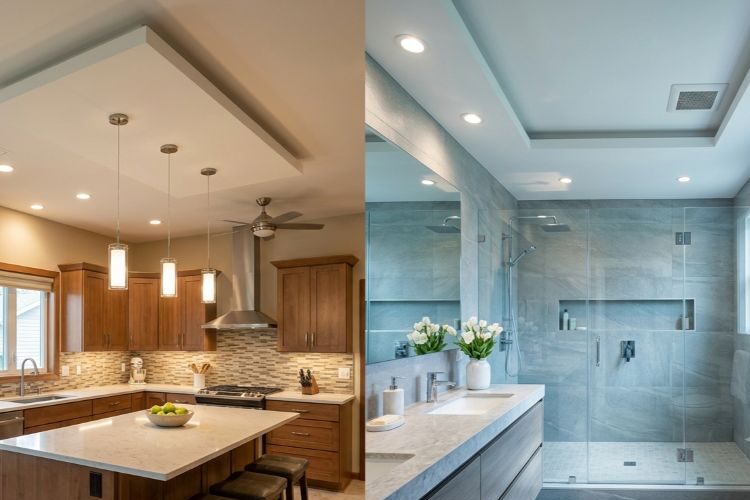
When designing a modern home, ceilings are no longer just an afterthought they are considered the “fifth wall.” Among the various interior design upgrades, installing a false ceiling (or dropped ceiling) has become immensely popular. However, when it comes to high-utility zones like kitchens and bathrooms, the decision requires careful evaluation.
These spaces are exposed to unique challenges, including extreme temperature fluctuations, high humidity, steam, and cooking grease.
If you are considering upgrading your home, here is a detailed breakdown of the pros and cons of installing false ceilings in kitchens and bathrooms to help you make an informed decision.
The Pros of False Ceilings in Kitchens and Bathrooms
1. Seamless Concealment of Services
Kitchens and bathrooms are the plumbing and electrical hubs of any home. They house complex networks of water pipes, water heaters, AC ducts, and electrical wiring. A false ceiling acts as a pristine cover, hiding these unsightly elements while maintaining a clean, minimalist aesthetic.
2. Advanced and Integrated Lighting Options
Standard concrete ceilings limit you to a single central light fixture. By utilizing specialized Gypsum false ceilings, you can install integrated lighting solutions. This includes recessed spotlights, ambient LED strip coves, and task lighting directly above kitchen countertops or bathroom mirrors, instantly elevating the room’s mood and functionality.
3. Acoustic and Thermal Insulation
False ceilings create an air gap between the actual concrete slab and the dropped panels. This gap acts as a natural insulator:
- Thermal: It traps cool air from the AC, reducing the load on your cooling systems in hot climates.
- Acoustic: It dampens the sound of rushing water from upstairs plumbing, a common nuisance in multi-story apartments and villas.
4. Resistance to Specific Environmental Stressors
When built using premium materialssuch as moisture-resistant green gypsum boards or PVC panelsfalse ceilings actively resist sagging, swelling, and water stains, ensuring your overhead structures remain flawless for years.
The Cons of False Ceilings in Kitchens and Bathrooms
1. Reduction in Room Height
Because a false ceiling must be dropped at least several inches below the original slab to accommodate wiring and fixtures, it inherently reduces the vertical height of the room. In small bathrooms or kitchens with low initial ceilings, this can sometimes make the space feel slightly claustrophobic if not designed correctly.
2. Maintenance and Access Challenges
What happens if a pipe leaks or a wire shorts out behind the ceiling? If your dropped ceiling is fully enclosed without strategically placed access panels, troubleshooting plumbing or electrical issues can become complicated, sometimes requiring cutting through the gypsum board to reach the problem.
3. Risk of Mold and Pest Infestation
The hidden cavity above a false ceiling is dark and warm. If a minor, unnoticed leak occurs or if moisture penetrates the ceiling due to poor ventilation, the cavity can become a breeding ground for mold, mildew, or pests. This highlights the absolute necessity of hiring professionals who use proper sealing techniques.
Kitchen vs. Bathroom: Key Considerations
Before choosing your design, keep these room-specific rules in mind:
- In the Kitchen: Focus on ease of cleaning. Cooking releases grease particles that rise with heat. Ensure the paint or material used on your kitchen false ceiling can be easily wiped down without staining.
- In the Bathroom: Focus heavily on moisture thresholds. Bathrooms experience direct, concentrated steam. Always opt for 15 mm moisture-resistant boards and high-capacity exhaust fans to pull humid air out of the ceiling cavity.
Premium False Ceiling Services in MBR City
Executing a flawless overhead installation in high-moisture zones requires premium materials and highly precise craftsmanship. Tilal Modern is the premier fit-out expert delivering superior turnkey solutions across Dubai.
False Ceiling Services in MBR City
We specialize in delivering top-tier gypsum and dropped ceiling installations specifically customized for the luxury homes of Mohammed Bin Rashid City (MBR City). Whether you own a contemporary villa or a high-end apartment in this prestigious community, our team designs and executes stunning, moisture-resistant ceiling structures that perfectly complement your interior architecture.
From integrating intricate cove lighting to ensuring absolute moisture protection in your master baths, we combine aesthetic luxury with structural engineering. Discover how we can transform your space by visiting Tilal Modern to view our luxury portfolio or book a consultation.
FAQs: Pros and Cons of False Ceilings in Kitchens and Bathrooms
1. Which material is best for a bathroom false ceiling?
Moisture-resistant (green) gypsum board is highly recommended for luxury finishes, provided it is treated with a waterproof primer and anti-microbial paint. For highly utilitarian or exceptionally wet spaces, PVC panels or aluminum tiled ceilings are also popular due to their absolute water resistance.
2. How do you access leaking pipes behind a gypsum false ceiling?
During the installation process, professional teams install hidden, flush-mounted access panels (trapdoors) directly beneath key plumbing joints or water heaters. This allows maintenance teams to inspect and repair utilities without damaging the ceiling structure.
3. Can a false ceiling fall down due to kitchen heat?
No, not if it is installed correctly. Heavy-duty galvanized iron framing networks are used to securely anchor the false ceiling to the concrete slab. Standard kitchen cooking heat is not intense enough to compromise the structural integrity of these metal frames or professional gypsum boards.